
Blog
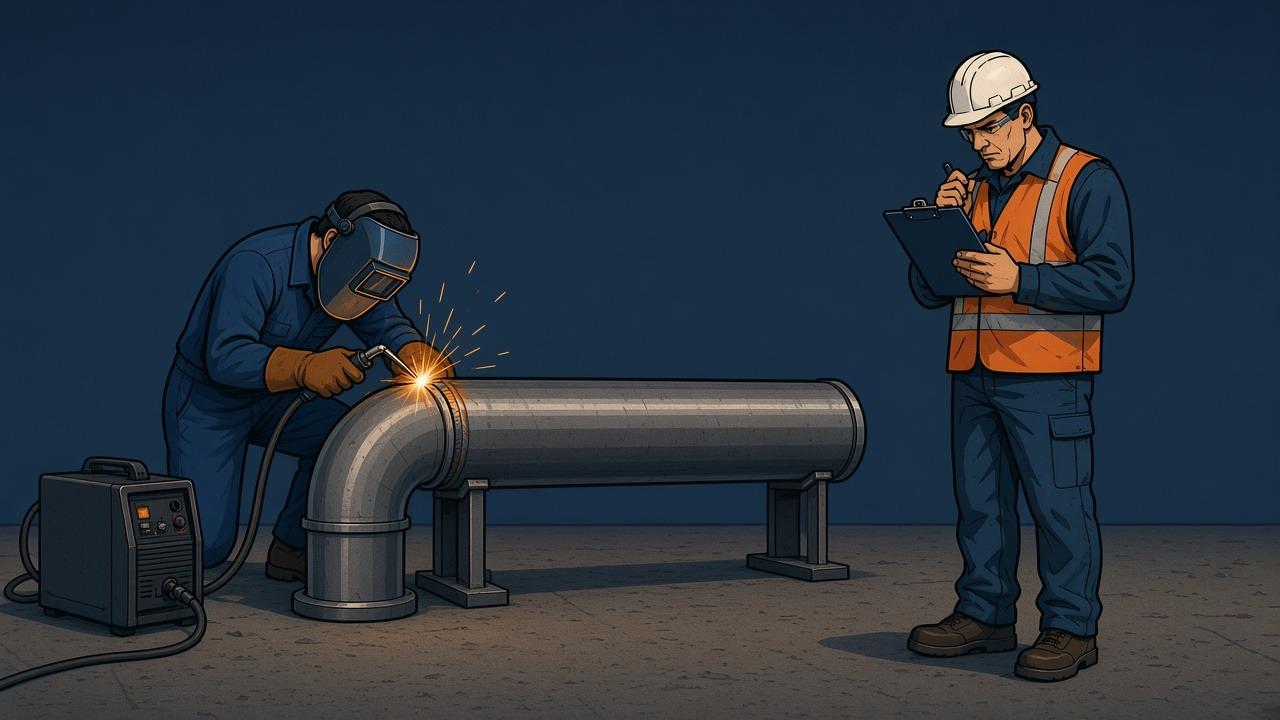
WPS Traceability in Pipe Welding: WPS, PQR, WPQ and Keeping Them on the Weld
WPS traceability in pipe welding: WPS, PQR and WPQ explained, when a weld is covered, welder continuity rules, and keeping WPS on each weld.
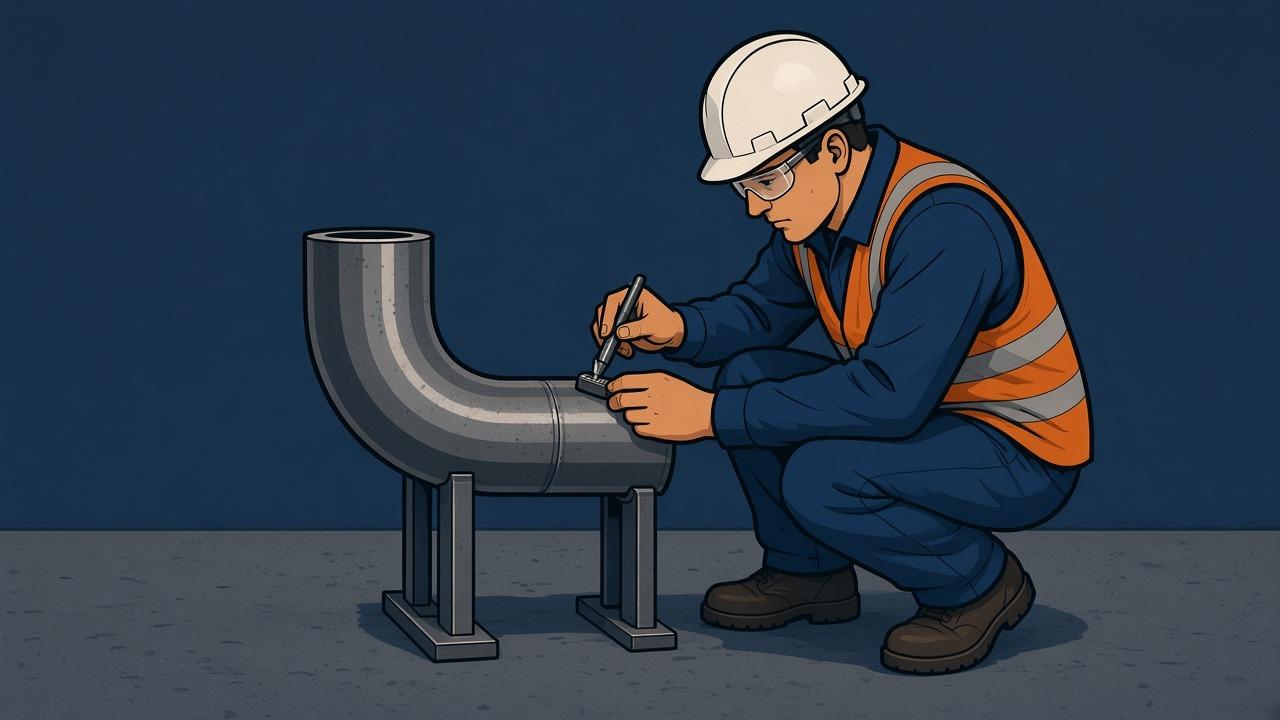
Piping Fabrication QC Checklist: 7 Checkpoints From Material to Release
A piping fabrication QC checklist for seven checkpoints, from material receipt and fit-up to NDT, repairs and release, plus how it fits your ITP.
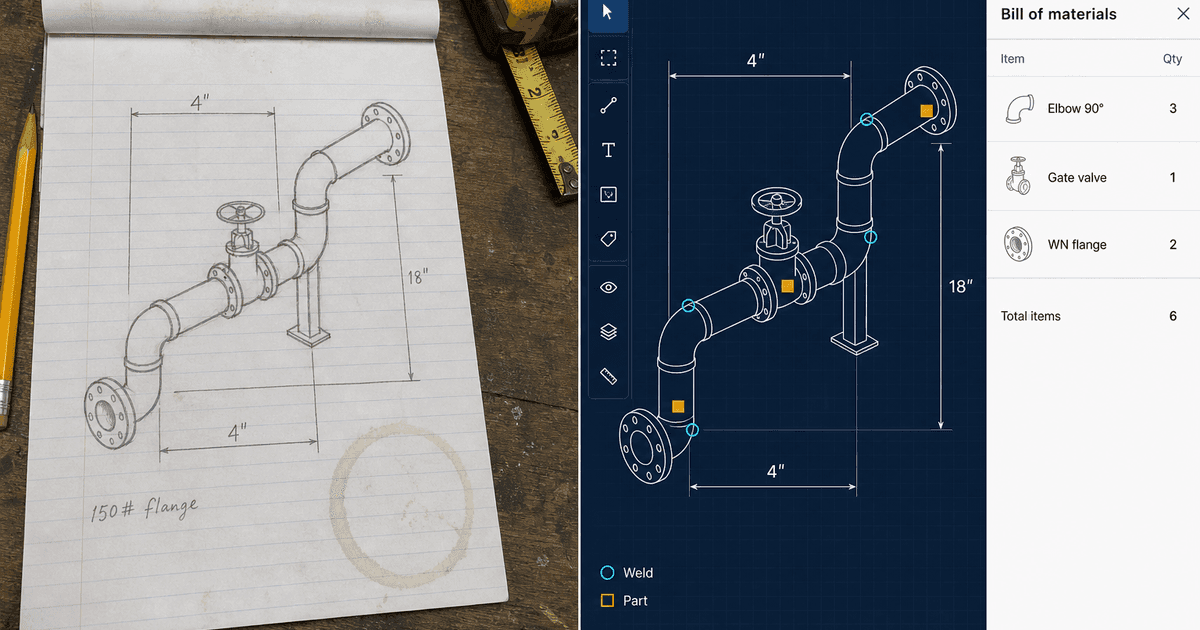
Piping Tender Takeoffs: From a Site Sketch to an Accurate BOM with MapWeld
Sketch a pipe run on paper during a site visit, photograph it, and let MapWeld turn it into a real BOM and weld count — no guesswork, nothing forgotten.
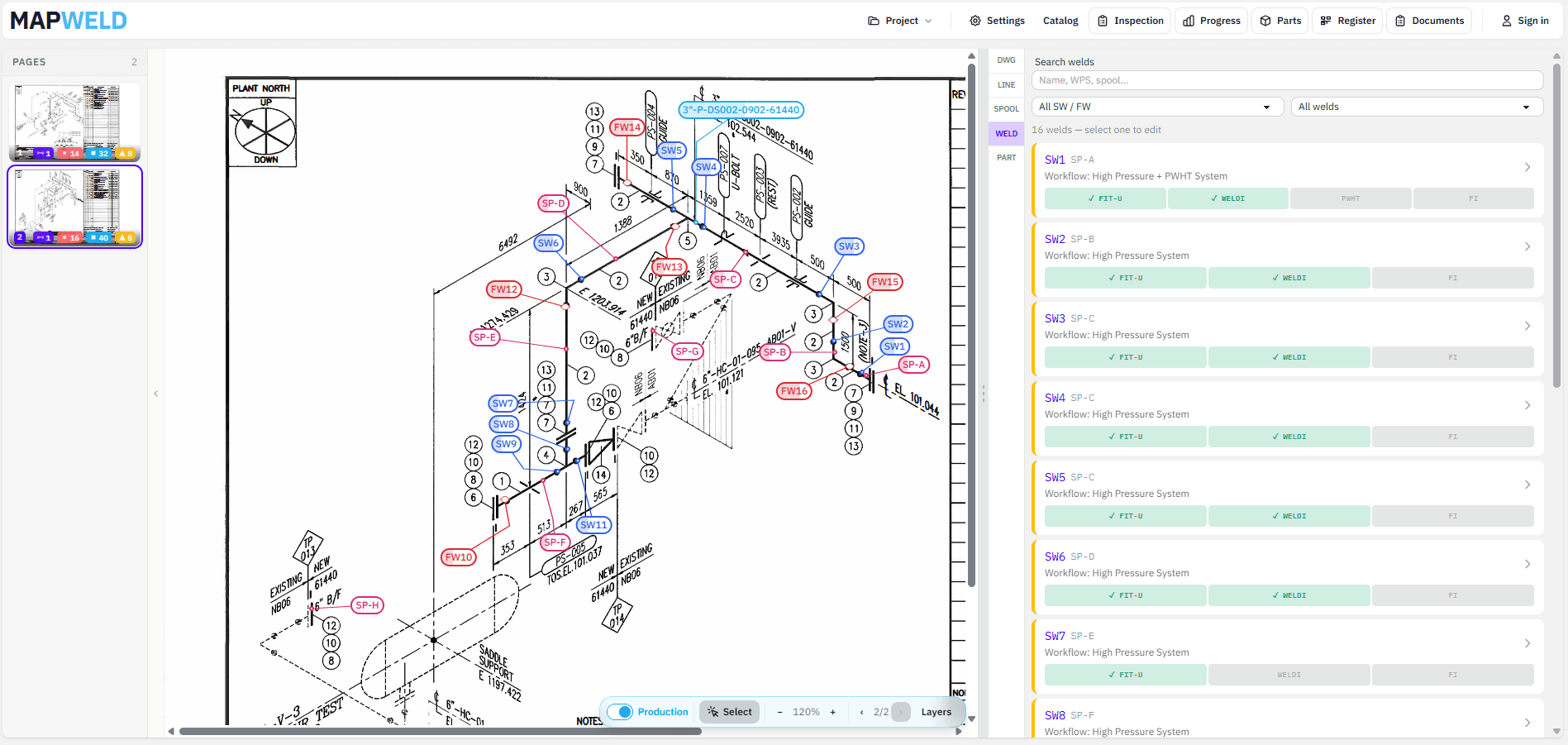
How to Set Up Weld Documentation Without an Enterprise System
Enterprise weld documentation platforms cost months and an IT department. Here's how small fabrication shops can set up proper weld documentation without the overhead.
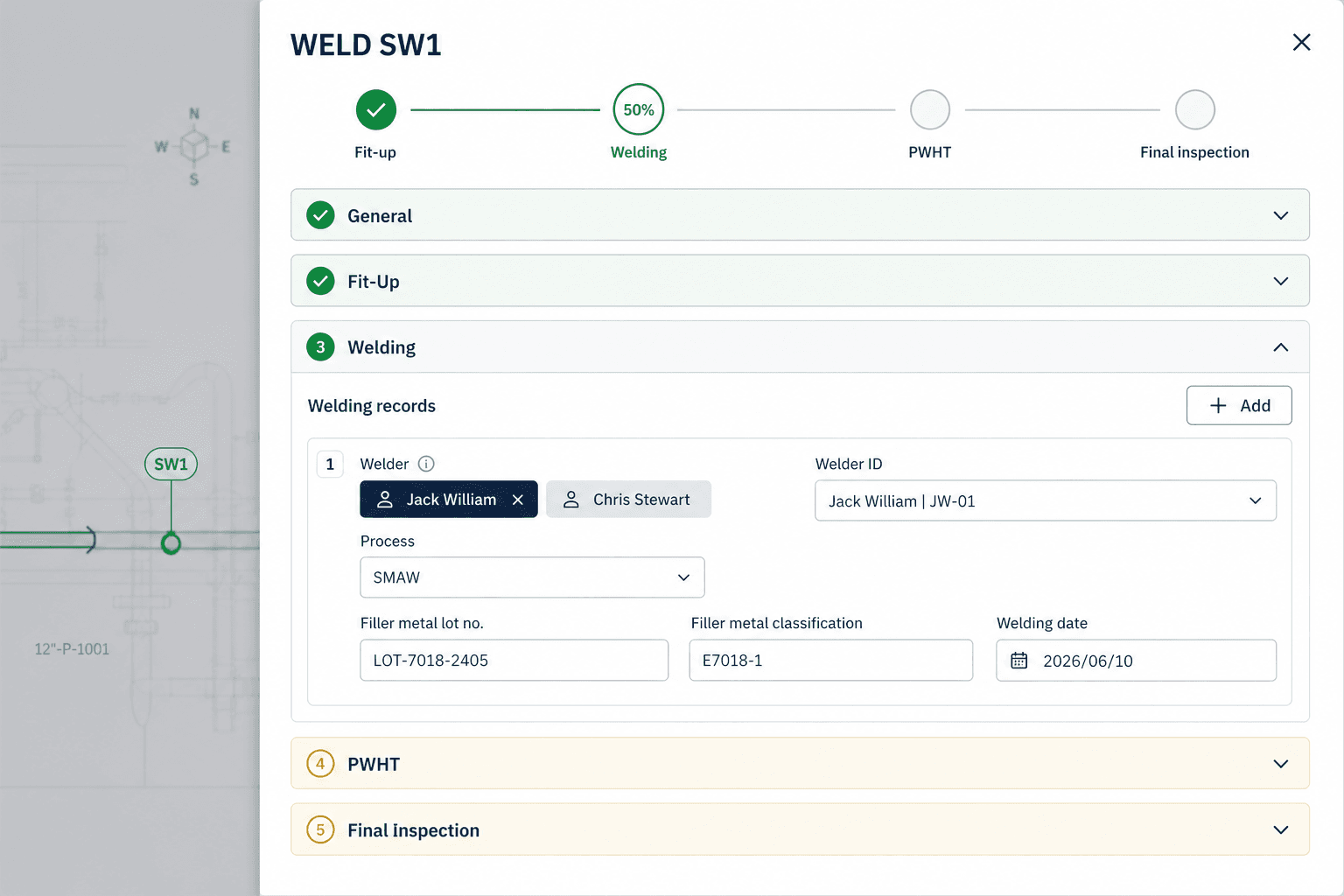
Weld Traceability 101: What It Is and Why It Matters
Weld traceability means being able to trace any weld back to the welder, procedure, and inspection record. Here's what that actually requires on a live fabrication project.
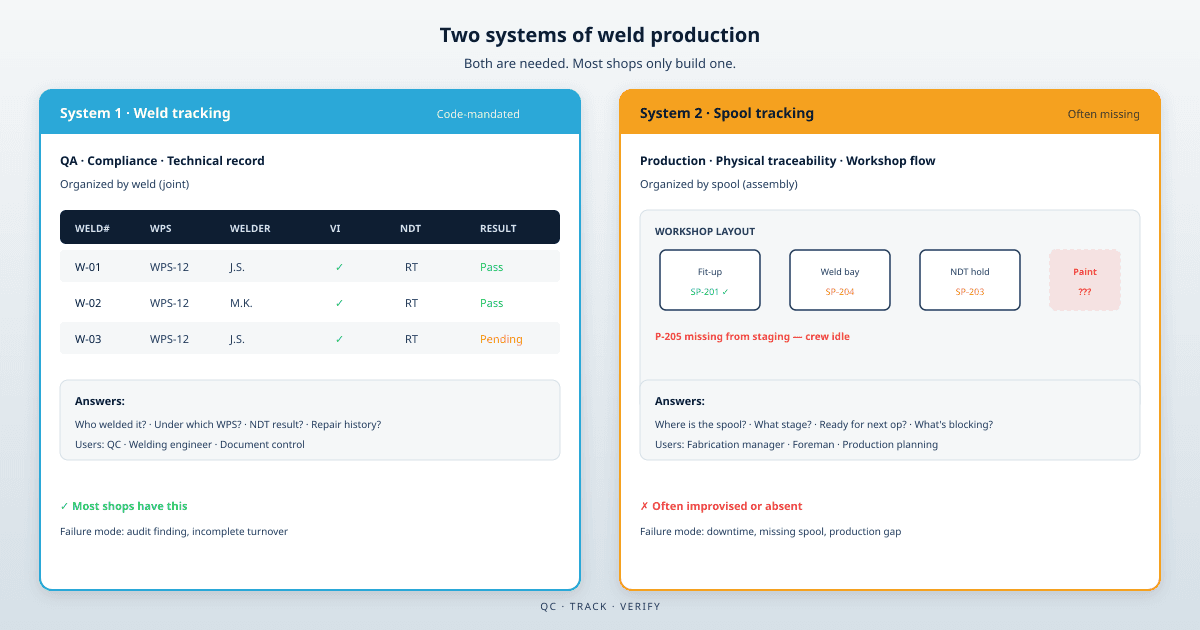
Pipe Spool Tracking: From Paper Markup to Structured Data
Weld production runs on two systems — weld tracking for QA and compliance, and spool tracking for physical workshop traceability. Most shops have the first. The second is where gaps and downtime start.
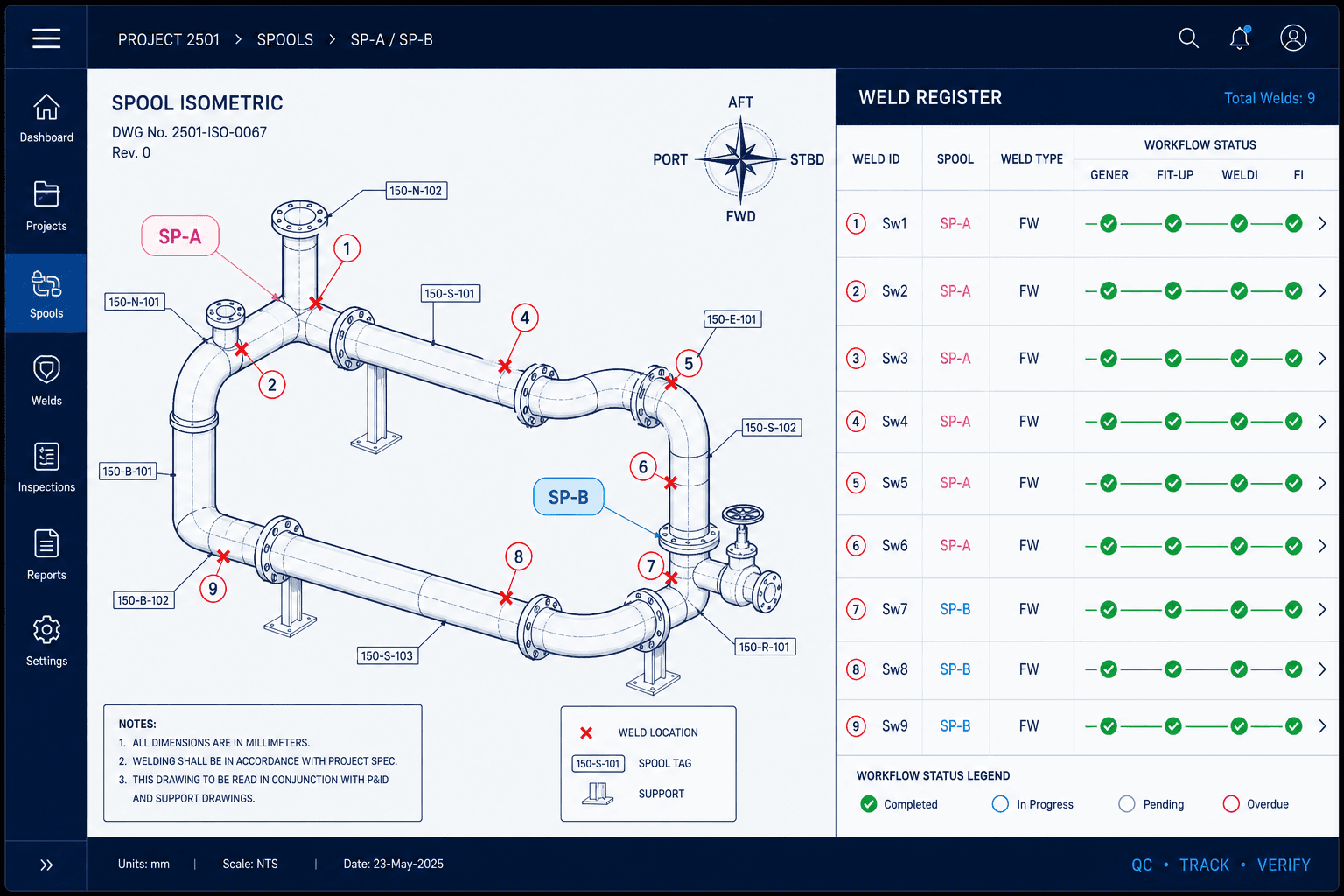
NDT Tracking for Pipe Fabrication: What Most Teams Get Wrong
Most weld registers treat NDT as a column. Here's why that breaks down on active projects — and what proper NDT tracking actually requires.
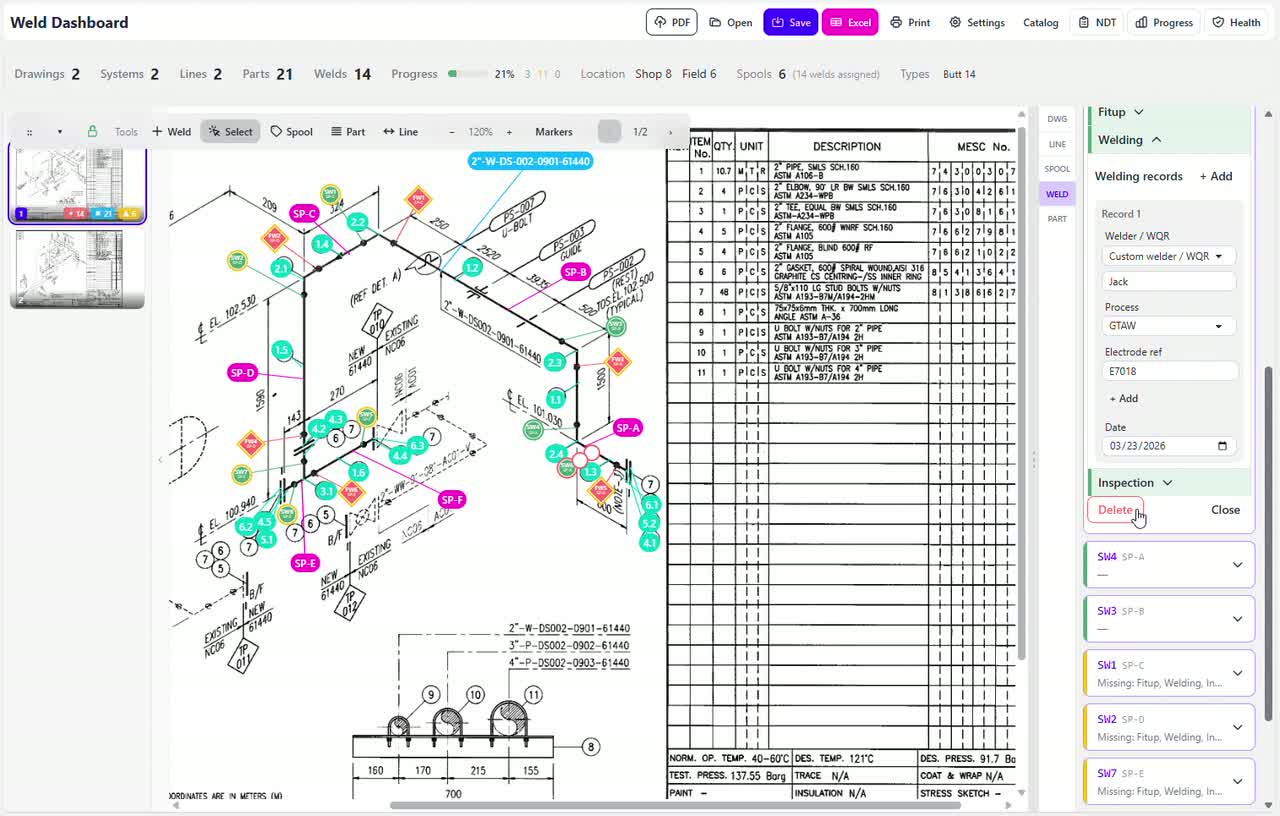
Weld Register Template: Why Excel Falls Apart on Real Projects
Every fabrication project starts with a weld register template in Excel. Here's why it falls apart — and what a better workflow looks like.